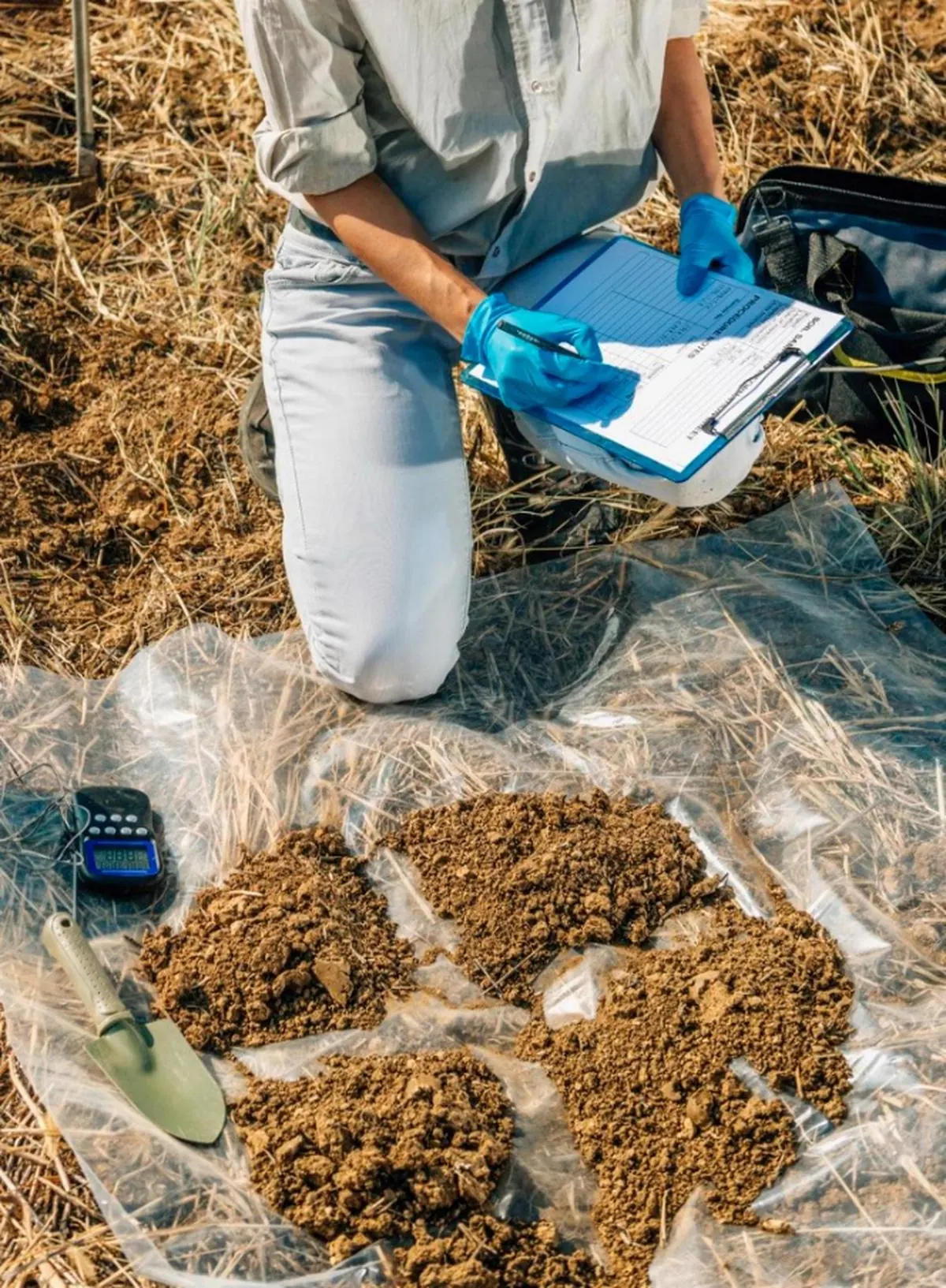
The food on your plate is more nutritious or less nutritious depending on the biological condition of the soil it grew in. This is not a hypothesis. It is one of the most robustly demonstrated findings in food science — yet it remains almost entirely invisible to the food system, to consumers, and to the policies that govern what farmers are paid to produce.
Key Findings
- UK food composition data shows declines of 10–76% in key minerals across common foods over the past 70 years, correlating with shifts in agricultural practice.
- Antioxidant levels in the same crop variety can vary up to 200-fold depending on soil biology and farming method — a range larger than the difference between different foods.
- Mycorrhizal fungi extend root surface area by up to 700×, enabling mineral uptake that is impossible through root absorption alone — and are routinely destroyed by intensive tillage.
- Crops grown under regenerative practices show consistently higher concentrations of iron, zinc, calcium, magnesium, vitamin C, and polyphenols across 3,000+ peer-reviewed studies.
- Soil organic matter above 3.5% is correlated with measurably higher mineral content in harvested crops in multiple independent datasets.
Seventy years of measurable decline
In 2004, researchers at the University of Texas published a landmark analysis comparing US Department of Agriculture nutritional data for 43 common fruit and vegetable crops between 1950 and 1999. The finding was unambiguous: reliable declines in protein, calcium, phosphorus, iron, riboflavin, and vitamin C. Depending on the nutrient and crop, losses ranged from 6% to 38%.
Similar analyses of UK food composition data — comparing McCance and Widdowson tables across decades — have found even more pronounced patterns. Iron content in meat fell by up to 55%. Copper in vegetables dropped by 76% in some categories. Calcium, magnesium, zinc, and vitamin C followed similar trajectories in multiple food groups. These are not small rounding errors. They represent meaningful changes in the nutritional return a person receives from eating a given quantity of food.
"You would need to eat eight oranges today to derive the same amount of Vitamin A your grandparents would have got from one. The science behind this figure is contested in its specifics, but the direction of travel is not."
The mechanisms behind this decline are multiple — crop breeding for yield and shelf life, changes in processing, longer supply chains — but the evidence overwhelmingly points to one primary driver: the biological impoverishment of agricultural soils. Soil that has been tilled repeatedly, dosed with synthetic inputs, and stripped of organic matter over decades has less capacity to supply crops with the full spectrum of minerals, trace elements, and biological signals they need to produce nutritionally complete food.
76%
Decline in copper
in UK vegetables
55%
Decline in iron
in UK meat
200×
Antioxidant variation
same crop, different soil
3,000+
Peer-reviewed studies
reviewed by Vitagri
How soil biology determines what ends up in food
To understand the soil–nutrition connection, it helps to understand mineralisation: the process by which nutrients locked in soil organic matter are converted into forms that plant roots can absorb. Nitrogen, phosphorus, potassium, calcium, magnesium, zinc, iron — none of these reach crops directly. They must first pass through the soil food web.
A tablespoon of biologically healthy soil contains more organisms than there are humans on earth. Bacteria, fungi, protozoa, nematodes, and arthropods interact in a dense web of exchanges. Bacteria break down organic compounds. Fungi extend mineral access across vast distances. Protozoa graze on bacteria and release nutrients in plant-available forms. Nematodes regulate bacterial populations. Each relationship shapes what the plant receives.
When this web is intact and diverse, the plant has access to a comprehensive mineral supply — one calibrated to its own demand through chemical signalling. When the web is disrupted, the plant's nutritional options narrow. It still grows, because modern agriculture has learned to supply nitrogen, phosphorus, and potassium synthetically. But the trace minerals, the secondary metabolites, the vitamin precursors — these require the biology. You cannot bottle the soil food web.
Mycorrhizal networks: the nutrient transport system
Of all the relationships in the soil food web, the mycorrhizal symbiosis between fungi and plant roots is among the most important for nutritional outcomes — and among the most widely damaged by modern farming practice.
Mycorrhizal fungi colonise plant roots and extend an enormous hyphal network into the surrounding soil — threads far finer than root hairs, reaching into pore spaces no root could access. In exchange for carbohydrates from the plant, the fungi deliver water and minerals, particularly phosphorus, zinc, and copper. Studies consistently show that mycorrhizally colonised plants access phosphorus from distances up to 1,000 times greater than roots alone could reach, and take up zinc at rates two to three times higher than non-colonised plants.
Phosphorus is more than a macronutrient. It is a building block for the biochemical pathways that produce polyphenols, flavonoids, and other secondary metabolites — the compounds most associated with human health benefits. A plant with adequate mycorrhizal supply invests differently in its biochemistry. The nutritional difference is measurable in the food.
What destroys mycorrhizal networks? Tillage physically severs the fungal threads. High-phosphorus fertiliser suppresses colonisation because the plant no longer needs the fungal supply. Systemic fungicides kill or inhibit the fungi directly. Three of the defining practices of intensive arable farming are, together, among the most effective means of dismantling the nutrient transport system. The consequences appear directly in the nutritional profile of harvested crops.
Organic matter: the storehouse of nutritional potential
Soil organic matter (SOM) is the carbon-rich layer from which biological activity draws its energy. It is the storehouse of nutrients, the habitat of microbes, and the structural glue that keeps soil porous enough to breathe and drain. In UK agricultural soils, SOM has declined significantly over the past century — a consequence of repeated tillage, continuous monoculture, and the removal of organic returns from the system.
The evidence linking SOM to nutritional quality is substantial. A meta-analysis published in the British Journal of Nutrition (Barański et al., 2014) — covering 343 peer-reviewed studies on organic versus conventional crops — found significantly higher concentrations of antioxidants, vitamin C, and polyphenols in crops grown in systems that prioritise organic matter and biological activity. The nutritional advantage of organically managed crops (which typically have higher SOM) ranged from 19% to 69% higher concentrations of key antioxidant compounds.
Research from Washington State University and the Rodale Institute has found that soils above 3.5% organic matter content consistently produce crops with higher mineral concentrations across multiple crop types and geographies. Below that threshold, the relationship weakens — not because organic matter stops mattering, but because below 3% the soil biology required to make nutrients plant-available is itself compromised.
"Healthy soil is not an environmental nicety. It is the upstream determinant of food quality — and food quality is the upstream determinant of human health. The chain is direct."
The yield trap: how productivity replaced nutrition
The post-war intensification of UK agriculture achieved something remarkable: dramatic increases in yield per acre. Between 1950 and 2000, wheat yields in England roughly trebled. The same period saw the Green Revolution transform food production globally. By the metric that mattered — tonnes per hectare — modern agriculture succeeded spectacularly.
But yield and nutritional density are not the same thing. They frequently trade against each other.
High-yielding varieties were bred for biomass, not biochemistry. They were designed to convert synthetic inputs — nitrogen, phosphorus, potassium — into volume. In doing so, they were implicitly selecting against the stress responses that drive secondary metabolite production. Polyphenols, antioxidants, and many vitamins are produced by plants as protective responses — to UV, to pest pressure, to nutrient scarcity. Plants optimised for easy growth in high-input conditions produce less of them.
This "dilution effect" — where higher yield dilutes the concentration of nutrients per unit of food — has been quantified across multiple studies. Donald Davis, whose 2004 analysis of historical USDA data drew wide attention, described it as one of the most likely explanations for the observed nutritional declines. A plant that grows faster and larger does not automatically become more nutritious. In many documented cases, it becomes less so.
What regenerative agriculture changes
The evidence base for regenerative practices is now extensive. Across 3,000+ peer-reviewed studies reviewed by Vitagri, a consistent pattern emerges: farming systems that invest in soil biological health produce food with measurably different nutritional profiles.
Cover crops — planted between cash crops to maintain living root coverage and feed soil biology — increase microbial diversity and organic matter. Studies on farms that have implemented cover cropping for more than five years show statistically significant increases in mycorrhizal colonisation rates and corresponding improvements in crop mineral content.
Reduced tillage preserves fungal networks, maintains soil structure, and prevents the oxidation of organic matter. Long-term trials comparing no-till to ploughed systems show consistent differences in SOM, microbial biomass, and, in several well-controlled studies, measurable differences in the nutritional quality of harvested crops.
Composting returns biological complexity to the soil — not just nutrients, but the organisms and organic compounds that feed the food web. Studies comparing composted versus synthetic fertiliser inputs across multiple crop cycles find that composted systems outperform on mineral uptake and secondary metabolite production, particularly in the later years of the comparison when SOM has had time to build.
Rotational grazing integrates livestock into the arable system, returning manure and biological diversity to soils while preventing the compaction associated with continuous grazing. The nutritional quality of produce from well-managed grass-fed and mixed systems is consistently higher in omega-3 fatty acids, conjugated linoleic acid (CLA), and fat-soluble vitamins than produce from confinement or monoculture systems.
Why the food system cannot see this
The evidence is clear. The practices are known. The question is why the food system has not responded.
The answer lies in measurement. The UK food system pays for yield, appearance, and shelf life — attributes that are visible, standardised, and easy to price. Nutritional density is invisible. A carrot grown in biologically impoverished soil looks identical to one grown in rich, living earth. Without testing, no one can tell them apart. And because no one tests, no one pays a premium for the difference. And because no premium exists, there is no financial incentive for farmers to invest in the practices that would produce it.
This is the market failure at the heart of the UK food system — and it is the problem the Vitagri GroundUp Framework is designed to solve. By establishing robust, verifiable measurement of soil biological health and crop nutritional quality, it becomes possible to identify which farms are producing nutritionally superior food, to certify that production, and to create the market signal that makes investment in soil health economically rational for farmers.
GroundUp Framework
This research underpins the foundational step of the GroundUp Framework: measure what matters. Soil biology metrics — microbial biomass, mycorrhizal colonisation rate, organic matter content — are the upstream determinants of crop nutritional density. Explore the full GroundUp Framework →
What can be measured, verified, and rewarded
The good news is that soil health is measurable. Advances in metagenomic sequencing, portable near-infrared spectroscopy, and standardised soil testing protocols have made it possible to characterise biological soil health at farm scale at decreasing cost. Microbial biomass carbon, fungal-bacterial ratios, mycorrhizal colonisation rates, active carbon, and earthworm counts are all established indicators with growing evidence bases linking them to nutritional outcomes.
Crop nutritional quality is also directly testable. Mineral profiling, ORAC antioxidant analysis, and polyphenol quantification are all routine commercial procedures. A growing number of retailers and food manufacturers are beginning to request nutritional certificates alongside conventional quality parameters. The infrastructure for nutritional quality measurement exists. What has been missing is the framework to apply it systematically, and the market structure to reward it.
Vitagri's position is that both are now achievable. The scientific evidence is sufficient to justify action. The measurement tools are mature enough to deploy. The policy environment — with post-Brexit Agricultural Transition payments increasingly linked to public goods — provides an opening for nutritional quality to be incorporated into how farmers are rewarded. The direction of change is clear. The question is the pace.