
Rob Ward
CEO & Co-Founder, Vitagri Org Ltd
Author — Growing Health white paper (2026) · Food, Health & Policy
Preventive Healthcare · Diet-Related Illness · UK Food Systems · GroundUp Framework
Diet-related illness costs the United Kingdom £268 billion every year. The nutritional quality of food is a primary determinant of that burden. And the nutritional quality of food is determined, more than any other factor, by the biological condition of the soil in which it grows. This is not an agricultural argument. It is a public health one.

This article is not written for farmers. It is written for the people who commission healthcare, design prevention strategies, allocate NHS budgets, and set food policy. It is written for anyone who has ever asked why chronic disease rates keep rising despite decades of public health campaigns — and wondered whether the answer might lie somewhere upstream of the hospital, the GP surgery, and the pharmacy. The answer, in part, does lie upstream. It lies in a field.
£268 billion. That is the estimated annual cost to the UK of diet-related illness — a figure drawn from our Growing Health research and consistent with independent analyses from the Food Foundation, the National Food Strategy, and academic institutions including the London School of Economics. It includes the cost of treating cardiovascular disease, the largest single expenditure within the NHS. It includes the rapidly escalating cost of managing type 2 diabetes — a condition affecting over 4 million people in England, with a further 13 million at high risk. It includes a substantial portion of the cancer treatment budget, given the well-established dietary contributors to several common cancer types. And it includes the productivity losses, social care costs, and welfare expenditure that trail from these conditions like shadows.
To contextualise that figure: the entire NHS budget for England in 2025–26 was approximately £190 billion. The cost of diet-related illness exceeds the total NHS budget. It is, by any measure, one of the largest addressable costs in UK public finances. And it is growing. The trajectory of type 2 diabetes alone — driven by rising obesity rates that are themselves linked to poor dietary quality — points to a significant further increase in the burden over the coming decade.
Against that backdrop, the investment in soil health incentives — the agri-environment payments, the farming innovation programmes, the soil standards under the Sustainable Farming Incentive — represents a fraction of a fraction. Not because soil health is considered unimportant, but because the connection between what happens in a field and what happens in a hospital has never been made sufficiently explicit to drive proportionate policy responses. That is what this article is intended to address.
The term "hidden hunger" was coined to describe a paradox that seemed, initially, to be a problem only of low-income countries: populations that consume enough calories to avoid starvation but suffer from chronic micronutrient deficiency that impairs health, development, and immune function. The World Health Organisation estimates that hidden hunger affects one billion people globally.
It is now increasingly clear that hidden hunger operates in high-income countries too — including the United Kingdom. The mechanism is different from developing-world malnutrition: it is not caloric scarcity but nutritional impoverishment of an energy-adequate diet. A population that eats sufficient calories but consumes food that has been progressively depleted of iron, zinc, magnesium, vitamin C, B vitamins, and polyphenols over seven decades of agricultural intensification is a population at risk of chronic micronutrient insufficiency, even if no one goes hungry.
The UK National Diet and Nutrition Survey documents the scale of the problem. Iron deficiency affects around 27% of young women in England. Magnesium insufficiency — linked to cardiovascular risk, type 2 diabetes, and depression — is widespread across adult age groups. Vitamin D is the most commonly supplemented nutrient in the country, but deficiencies in zinc, selenium, and B12 are also prevalent and clinically significant. These deficiencies are not primarily the result of people eating the wrong foods. They are, in part, the result of the right foods containing progressively less of what they should.
The McCance and Widdowson food composition tables — the UK's standard reference for nutrient content in common foods — show this decline with uncomfortable clarity. Comparing tables published across decades reveals consistent, substantial reductions in the mineral content of common fruit, vegetables, meat, and dairy. Copper in vegetables down by as much as 76% since the 1950s. Iron in meat reduced by up to 55%. Calcium, zinc, and magnesium showing comparable downward trends. These are not measurement artefacts. They reflect a real change in what the food system is delivering.
"We are not talking about food insecurity in the conventional sense. We are talking about the systematic depletion of nutritional quality across the entire food supply — and the health consequences of that depletion are baked into our chronic disease burden in ways we are only beginning to quantify."
The Nuffield Farming Scholars' Programme has been exploring the relationship between farming methods and food quality for several years — a body of practitioner-led research that sits alongside and complements the academic evidence base. Nuffield scholars have investigated the mechanisms by which soil health influences crop nutritional outcomes, examined the market structures that prevent nutritional quality from being priced into the supply chain, and explored international case studies of food systems that have successfully incorporated nutritional quality into quality assurance frameworks.
The consistent finding across this body of work — which aligns with the conclusions of our own Growing Health research — is that farming method matters enormously to nutritional outcomes. Farms that invest in soil biology, that manage organic matter actively, that minimise tillage disruption and synthetic input dependency, produce food that is measurably different in its nutritional profile from farms that do not. The difference is not marginal. In well-controlled comparative studies, it is clinically meaningful.
What makes this finding powerful for the health policy audience is that it is not speculative. The mechanisms are well understood. Soil biology determines mineral mobilisation. Mineral mobilisation determines what the plant can access. What the plant accesses determines what ends up in food. What ends up in food determines the micronutrient inputs to the human diet. The chain from field management decision to chronic disease risk is long, but it is traceable — and the evidence that supports each link is extensive.
The economic case for preventive health investment is, in principle, well understood within the health system. NICE's cost-effectiveness thresholds, the treasury's preference for early intervention, the NHS Long Term Plan's emphasis on prevention — all reflect an institutional recognition that treating disease is more expensive than preventing it. The challenge has always been demonstrating the magnitude of the preventive effect sufficiently clearly to compete with the immediate, visible demand of acute care.
For dietary quality as a preventive lever, the evidence is robust. The relationship between dietary quality and cardiovascular disease risk is among the best-documented in all of medicine. The evidence linking dietary patterns — particularly those high in micronutrients, polyphenols, and fibre — to reduced type 2 diabetes incidence, lower cancer risk, and better mental health outcomes is substantial and growing. The PREDIMED trial, the DASH study, and hundreds of prospective cohort studies provide a consistent picture: diet quality matters enormously to chronic disease risk, and improving it at population level delivers significant health and economic benefits.
What has not been adequately incorporated into this analysis is the upstream question: not just what people eat, but the nutritional content of what they eat. A diet ostensibly high in fruits and vegetables may be providing significantly less micronutrient input than the same diet did 50 years ago, because the nutritional density of those foods has declined. Public health messaging that encourages consumption of fruits and vegetables without addressing the question of their nutritional quality is solving half the problem. The other half lives on the farm.
At the Vitagri Growing Health webinar — which brought together soil scientists, nutrition researchers, farmers, NHS clinicians, and food policy professionals — the conversation around public health implications was among the most animated of the event. Panellists from clinical backgrounds spoke of patients presenting with conditions — fatigue, inflammatory markers, immune dysfunction — that standard dietary history would not flag as nutrition-related, because their diet looked adequate by conventional measures. The question of food quality, rather than food quantity, was emerging as a clinical blind spot.
Panellists from the farming community articulated the commercial reality with clarity. In the absence of any market mechanism that values nutritional quality, there is no financial incentive to invest in the soil health practices that would improve it. The farmer who spends significantly more on cover seed, foregoes the phosphorus fertiliser that suppresses mycorrhizal colonisation, and accepts the short-term yield dip that comes with the transition to reduced tillage receives no premium for the nutritionally superior food that results. The market cannot see what it does not measure. And what it does not measure, it does not reward.
The panellist who put it most starkly — and whose words have stayed with me — observed that the provision of nutrient-dense food from a nature-friendly farm ought to be regarded as equally important to the healthcare service as any clinical intervention. We agree. A food system that consistently delivers high-quality, nutritionally complete food to the population is performing a preventive healthcare function of enormous value. The problem is that no one has yet found a way to account for that value in the way the system is organised and funded.
Solving the £268 billion problem of diet-related illness requires action at multiple levels simultaneously. Public health messaging, food environment policy, reformulation of processed foods, sugar and salt taxes — all of these have a role. But none of them address the upstream question of the nutritional quality of the primary food supply. None of them change what happens in the soil.
The vision we are working towards at Vitagri is a food system where nutritional quality — measured rigorously and verified independently — is a valued and rewarded attribute of food production. Where the farmer with exceptional soil health and measurably nutrient-dense crops has a route to market that recognises that excellence. Where NHS procurement, public sector catering, and health-conscious retailers can access verified nutritional quality data and make purchasing decisions accordingly. Where the investment case for soil health is not just environmental but public-health-economic.
This is not a distant aspiration. The measurement technology exists. Portable near-infrared spectroscopy, metagenomic soil analysis, standardised mineral profiling, and polyphenol quantification are all commercially available and increasingly affordable. What has been missing is the framework to apply them systematically, and the market structure to reward the results. The GroundUp Framework is designed to provide the first. The evidence in this article — and in the Growing Health white paper — is intended to help build the second.
The NHS cannot solve the diet-related illness problem from within clinical settings alone. It needs a food system that is, by design, oriented towards nutritional quality. Creating that system requires that health policy and food policy are understood as the same conversation. And it requires that the connection between what happens in a field and what happens in a body — mediated by 70 years of declining soil health and food nutrition — is finally made explicit, quantified, and acted upon.
£268 billion is a very large number. The investment required to begin reversing the soil health decline that contributes to it is, by comparison, modest. The question is whether health policy and food policy can be connected quickly enough to act on that asymmetry.
The GroundUp Framework provides the measurement, verification, and certification infrastructure that connects soil health to verifiable nutritional quality — creating the evidence trail that health commissioners and policymakers need to act.
Growing Health synthesises 3,000+ peer-reviewed studies on soil health, nutrient density, and the food–health connection into a 51-page white paper. Free to download — no paywall, no login required.
Or subscribe to the Vitagri Substack for research updates.

The government has streamlined SFI and opened £225m in new grants. What the reforms get right on soil health — and the gap they don't close.

New research maps how specific microorganisms travel from soil through plants into the human gut — with profound implications for human health.
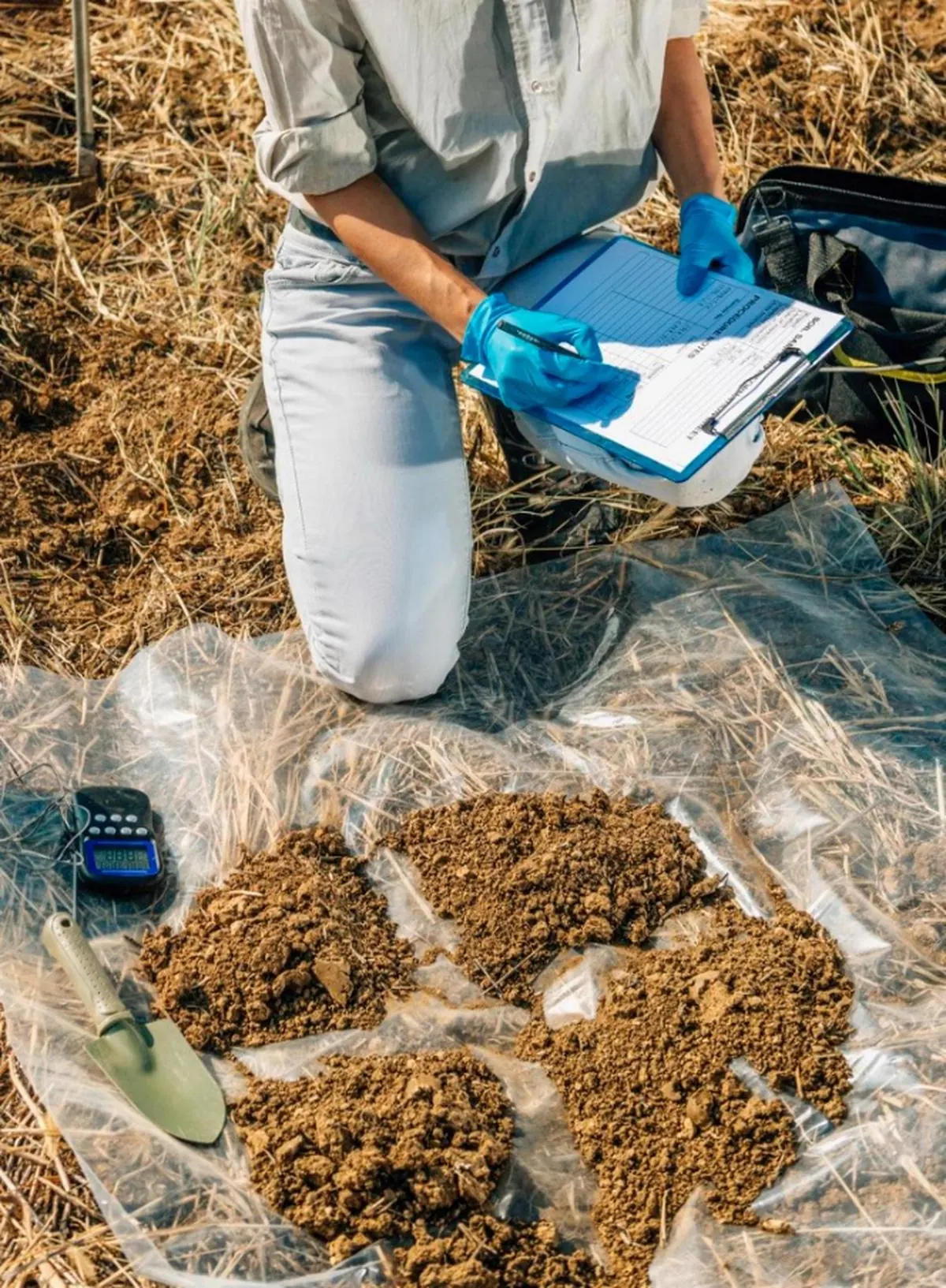
The mechanisms linking soil biology to the nutritional profile of crops — and 70 years of measurable decline in UK food composition data.