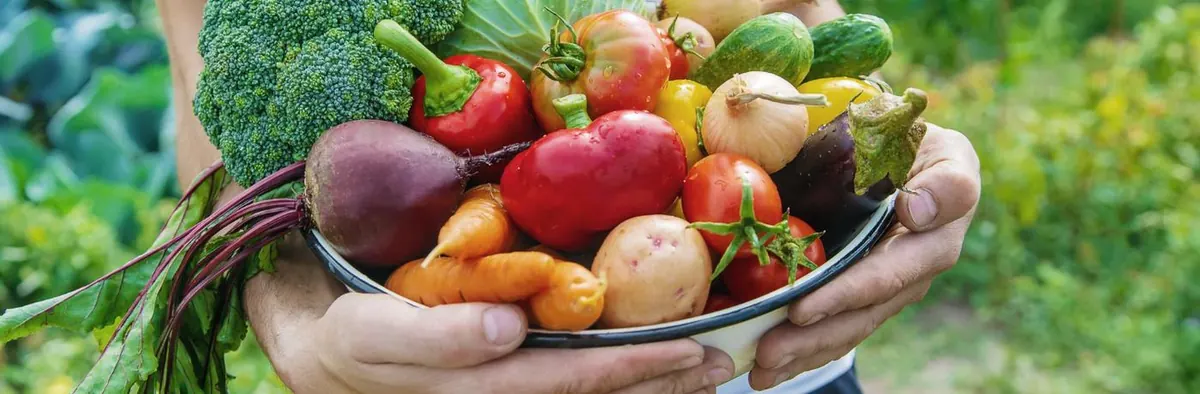
One of the most fundamental problems in food systems is definitional. When a food label says "nutritious", what does that mean? When a farming method is described as producing "higher quality" food, how is quality being measured? When a retailer claims its product is "better for you", what is the standard against which that claim is assessed?
The honest answer, in most cases, is that there is no agreed standard. "Nutrient dense" is not a defined regulatory term. It does not appear in the UK Food Standards Agency's labelling framework in a way that links it to measurable criteria. It cannot currently be verified, certified, or compared across farms or supply chains in any systematic way.
The Bionutrient Food Association (BFA) is working to change this. Its Treaty for Nutrient Density — nearing formal publication in 2026 — will define nutrient density benchmarks for 20 food crops globally. For the first time, there will be an internationally developed, scientifically grounded definition of what nutrient dense means for wheat, carrots, tomatoes, potatoes, and 16 other staple crops.
How the Treaty Was Developed
The Treaty's development process is as significant as its content. Rather than being defined by a single scientific body or government agency, it was developed through a series of Listening Sessions held across six continents — engaging farmers, food producers, nutritionists, scientists, and consumers in a genuine global dialogue about what nutrient density means and how it should be measured.
This bottom-up, multi-stakeholder process is deliberately designed to produce standards that are practically applicable — not just scientifically defensible in theory, but usable in the field, by farmers and in supply chains, without prohibitive cost or complexity. The BFA's approach recognises that any standard which requires laboratory analysis costing hundreds of pounds per sample will never be adopted at scale. Practical measurement is a design constraint, not an afterthought.
The Bionutrient Meter
Central to the BFA's measurement infrastructure is the Bionutrient Meter — a handheld near-infrared spectroscopy device that can measure the phytonutrient profile of fresh produce in seconds, without laboratory analysis. The device correlates spectral signatures with known nutrient concentrations, allowing rapid, low-cost assessment of the nutritional quality of food at point of sale or at the farm gate.
Vitagri has been following the development of the Bionutrient Meter closely, as part of our broader assessment of the measurement technologies that could underpin the GroundUp Framework. The ability to measure nutritional quality rapidly, affordably, and reliably at scale is a prerequisite for any system that seeks to reward farmers for producing more nutritious food. The Bionutrient Meter represents one of the most promising tools in this space.
Why Standards Matter for Farmers and Consumers
Without agreed definitions, the market for nutrient-dense food cannot function properly. Farmers who invest in soil health and regenerative practices cannot communicate the nutritional premium of what they produce — because there is no common language to describe it. Retailers who want to offer genuinely superior food cannot do so credibly — because they have no way to verify the claims. Consumers who want to make better food choices cannot do so reliably — because the information they need simply isn't on the label.
The BFA Treaty creates the definitional foundation on which all of this can be built. It answers the question: "better than what?" It provides the baseline against which improvement can be measured, verified, and communicated.
This is precisely the gap that Vitagri's GroundUp Framework is designed to fill in the UK context — a practical, farm-level measurement and verification system built on robust scientific standards. The convergence of the BFA's global definitional work and Vitagri's UK implementation framework represents a significant step forward for the nutrient-dense food movement.
What Happens Next
The formal publication of the Treaty in 2026 will mark the beginning of an adoption process, not an endpoint. Standards are only useful when they are incorporated into trading relationships, procurement criteria, and regulatory frameworks. Vitagri is engaged with these conversations at the UK level, working with retailers, food businesses, and policymakers to explore how nutrient density standards could be embedded in supply chain requirements and public procurement — including school food, hospital catering, and government nutrition programmes.
The Bionutrient Food Association's Treaty is the first internationally agreed answer to a question that has been too long unanswered. It deserves to be the starting point for a much larger conversation about what we want our food system to produce.
Explore Vitagri's approach to measuring and verifying nutrient density