
Rob Ward
CEO & Co-Founder, Vitagri Org Ltd
Author — Growing Health white paper (2026) · UK Food Policy · GroundUp Framework
Nutrient Density · Soil Health · Agricultural Reform · Food Systems
The government has streamlined the Sustainable Farming Incentive, opened £225m in new capital grants, and preserved the Soil Standards that matter most to nutrient-dense production. But the reforms still lack any mechanism to measure or reward food quality. Here is what they get right — and what remains conspicuously absent.

The reforms to the Sustainable Farming Incentive announced in early 2026 represent the most significant restructuring of England's agri-environment scheme since the Agricultural Transition began. For farmers who care about soil health — and for those of us focused on the relationship between soil health and food quality — the changes are a mixed picture. Progress in the right direction, substantial new investment, but a fundamental gap that the reforms do nothing to close.
The government's decision to cut SFI from 102 actions to 71 was driven primarily by farmer feedback: the scheme was too complex, the administrative burden too high, and the payment rates too low to justify the transition costs for many operations. The simplification is genuine. Actions have been consolidated, payment rates reviewed, and the application process streamlined. For farmers who were deterred by the previous version's complexity, this removes a real barrier to entry.
Critically for soil health advocates, the consolidation has not stripped out the actions that matter most. The Soil Organic Matter Standard — requiring farmers to measure and improve organic matter levels — remains. The Integrated Pest Management actions, which are linked to reduced synthetic input use and better biological soil conditions, are retained in consolidated form. Cover cropping payments survive, as do incentives for reduced or no-till systems. These are the building blocks of the kind of soil biology that our Growing Health research identifies as the upstream determinant of crop nutritional quality.
What has changed is the emphasis. The reformed scheme is more clearly framed around its dual objectives: environmental outcomes (carbon, water quality, biodiversity) and food production viability. The language of "public goods" remains, but there is greater acknowledgement that farmers need to be economically viable to deliver those goods. This is a healthier framing than the early versions of the Agricultural Transition, which sometimes felt like environmental policy grafted awkwardly onto a farming support mechanism.
The three Soil Standards at the core of the reformed SFI — cover cropping, reduced tillage, and organic matter enhancement — are not primarily food quality policies. They were designed as environmental interventions, targeting carbon sequestration, erosion prevention, and water infiltration. But they are, incidentally, among the most powerful levers available to a farmer who wants to improve the nutritional quality of what they grow.
Cover cropping maintains living root coverage between cash crops. Living roots feed soil biology — exuding carbohydrates, signalling to mycorrhizal fungi, sustaining the microbial populations that mobilise minerals. The evidence from farms that have implemented multi-species cover cropping for five or more years consistently shows higher mycorrhizal colonisation rates, greater microbial biomass, and measurably higher mineral concentrations in subsequent cash crops. This is not coincidental. It is the mechanism working exactly as the science predicts.
Reduced tillage preserves the fungal networks that extend plant root access to minerals by a factor of up to 700 times. Every pass of a plough severs those threads. They regrow, but each disruption delays the season's mineralisation cycle and reduces the fungal biomass available to the following crop. Long-term no-till systems, where the fungal network is allowed to persist across multiple seasons, consistently outperform ploughed systems on measures of mycorrhizal colonisation — and, in controlled studies, on mineral content of harvested crops.
Organic matter enhancement is perhaps the most direct mechanism. Soil organic matter above 3.5% is correlated with measurably higher mineral content in harvested crops across multiple independent datasets. Below that threshold, the biological activity required to make nutrients plant-available is itself compromised. The SFI Soil Organic Matter Standard, by incentivising farmers to build organic matter through composting, green manures, and crop residue management, is indirectly investing in the nutritional potential of UK food production.
The new £70m Farming Innovation Programme is, in our view, one of the more interesting elements of the reformed package. It creates a dedicated funding stream for novel approaches to sustainable food production — and, importantly, the programme's scope explicitly includes measurement and data infrastructure, not just farming practice.
This matters because the bottleneck in connecting soil health to food quality has never been the farming practices. We know how to build soil biology. We know cover cropping works, that reduced tillage helps, that organic matter matters. The bottleneck has been measurement — the ability to quantify nutritional outcomes at farm level, link them to soil health metrics, and create the verified data trail that would allow a premium to be attached to nutritional quality in the supply chain.
The Farming Innovation Programme, structured correctly, could fund exactly the kind of proof-of-concept work that demonstrates the feasibility of nutritional quality measurement at scale. Several of the programme's priority themes — precision agriculture, data-driven farm management, supply chain transparency — map directly onto what the GroundUp Framework requires. We would encourage any farmer or research group exploring nutritional quality measurement to look seriously at the programme as a funding route for pilot work.
"The growing and providing of nutrient-dense food from a nature-friendly farm is equally as important as the healthcare service — yet only one of these two public goods receives anything close to proportionate public investment."
Here is the fundamental problem with the SFI reforms, for all their genuine progress: they pay farmers for process, not for outcomes. They reward cover cropping, not the mineral content of the crops grown after it. They incentivise reduced tillage, not the nutritional quality of food produced by the preserved fungal network. The Soil Organic Matter Standard requires organic matter measurement, but there is no corresponding requirement — and no corresponding payment — for the downstream nutritional outcome that higher organic matter enables.
This is not a criticism that applies uniquely to SFI. It reflects a structural feature of virtually all agri-environment policy globally: public funds are used to pay for practices that are believed to produce public benefits, but the benefits themselves are rarely measured or verified. The policy instruments that make sense for carbon — where credits can be calculated from practice data — have not yet been developed for nutritional quality, where the outcome is more variable and the measurement infrastructure is less mature.
But the absence of nutritional outcome measurement from SFI has a direct cost. Without it, there is no mechanism for the most nutritionally productive farms — those whose soil biology, farming practice, and management approach produces measurably superior food — to be identified, differentiated, or rewarded. The best farms and the worst farms receive identical SFI payments, because SFI cannot see the difference. The market cannot see it either, because the supply chain has no nutritional quality data. The farmer with exceptional soil health and exceptional nutritional outcomes has no route to capturing the value of that excellence.
The cost of diet-related illness in the UK is estimated at £268 billion annually — a figure that encompasses healthcare costs, productivity losses, and social care expenditure associated with conditions that have dietary quality as a primary or significant contributing factor: cardiovascular disease, type 2 diabetes, certain cancers, obesity and its comorbidities, and a range of inflammatory conditions linked to chronic micronutrient deficiency.
Against that figure, the total investment in SFI — a scheme designed in part to improve the environmental conditions in which food is grown — is modest. The new capital grants of £225m are welcome. But they are not primarily designed to improve food quality, and in the absence of nutritional quality measurement, there is no guarantee that they will. It is perfectly possible for a farm to fully comply with every SFI action, receive every available payment, and still produce food of mediocre nutritional quality — because nutritional quality is neither measured nor required.
We are not arguing that SFI should become a nutritional quality policy. That would be an overreach, and the measurement infrastructure to support it is not yet in place. What we are arguing is that the direction of travel — towards outcome-based public payments — needs to eventually incorporate nutritional outcomes alongside environmental ones. The £268 billion annual bill for diet-related illness provides the economic argument. The Growing Health research base provides the scientific foundation. The GroundUp Framework provides the measurement approach.
The GroundUp Framework is designed precisely to fill the gap that SFI leaves open. It provides a structured approach to measuring soil biological health — microbial biomass, mycorrhizal colonisation rate, organic matter content, earthworm density — and linking those measurements to crop nutritional quality data gathered through standardised analytical protocols.
Where SFI pays for the practice of cover cropping, the GroundUp Framework measures the outcome: what is the actual mineral content of the crop grown on this farm, and how does it compare to the national baseline? Where SFI rewards the process of reducing tillage, GroundUp verifies the result: is the mycorrhizal network measurably healthier than on a comparable ploughed farm? Does that translate into measurably different mineral uptake?
This layer of outcome measurement does not replace SFI. It complements it. Farms that are already enrolled in SFI — maintaining cover, building organic matter, reducing tillage — are exactly the farms most likely to produce high scores on GroundUp assessment criteria. The framework provides the data trail that connects good farming practice to nutritional outcomes and creates the verified quality signal that premium buyers, health-conscious retailers, and public procurement bodies need to act on.
The SFI 2026 reforms are a step in the right direction. They simplify access, preserve what matters on soil health, and create new investment flows through the capital grants programme. For farmers already committed to regenerative practice, they are a useful support mechanism. But they are not — and were not designed to be — a policy for nutritional quality. That work remains to be done. And it remains urgent.
The GroundUp Framework translates soil health investment into verified nutritional quality outcomes — creating the market signal and policy evidence base that the reformed SFI cannot yet provide.
Our 51-page white paper synthesises 3,000+ peer-reviewed studies on soil health, nutrient density, and the food–health connection. Free to download — no paywall, no login required.
Or subscribe to the Vitagri Substack for research updates.
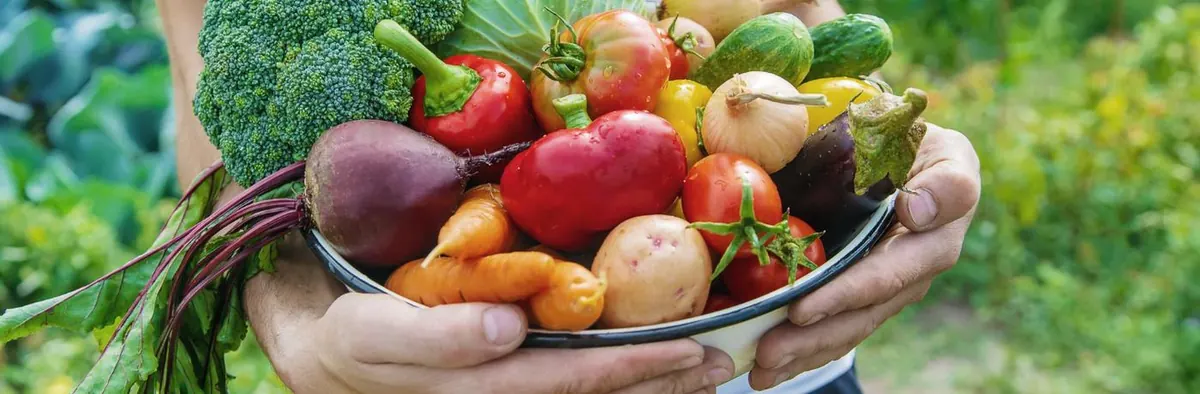
The case for treating soil health as a public health investment — written for health and policy audiences, not farmers.

New research maps how specific microorganisms travel from soil through plants into the human gut — with profound implications for human health.
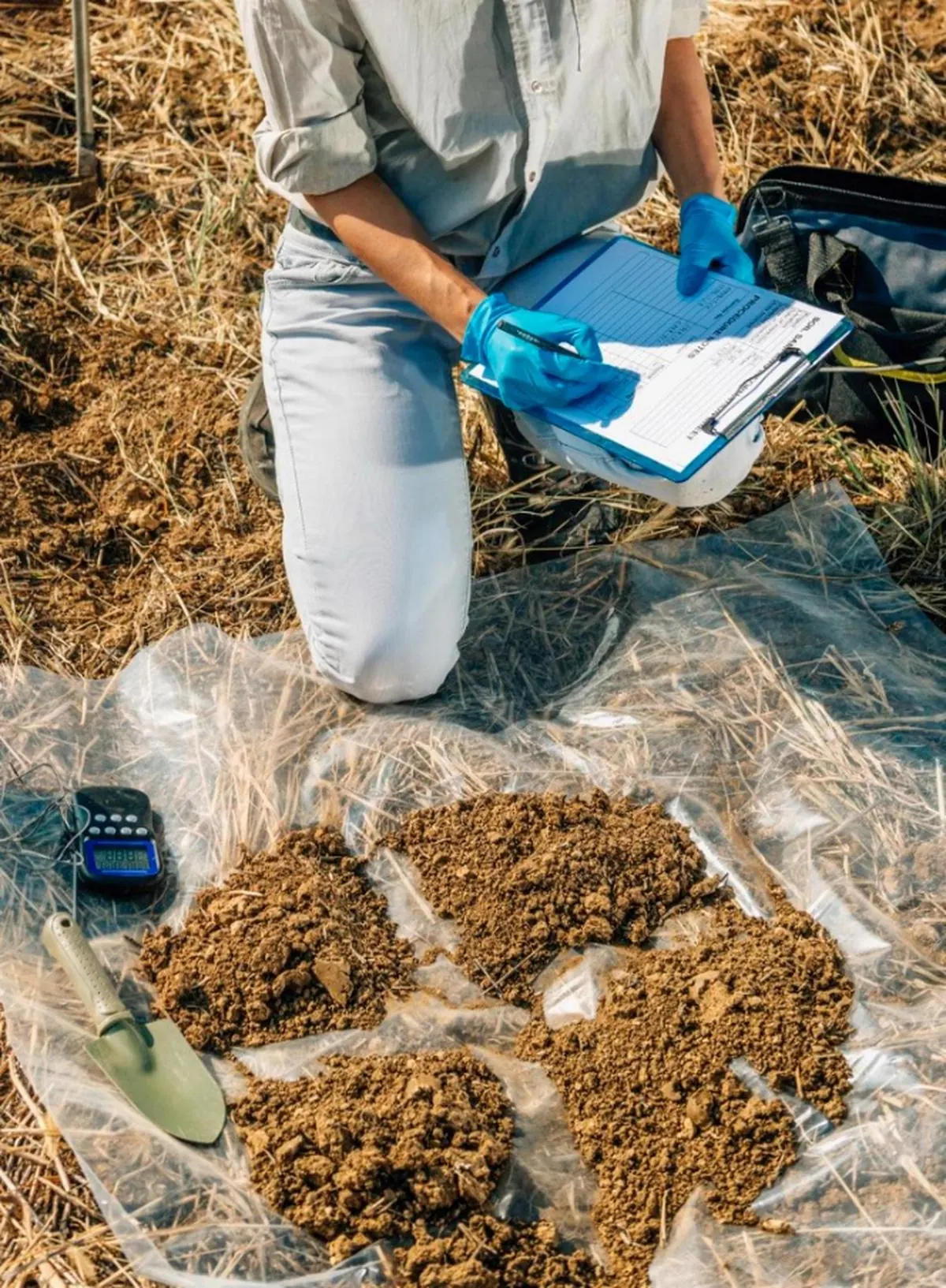
The mechanisms linking soil biology to the nutritional profile of crops — and 70 years of measurable decline in UK food composition data.
12 interactive modules from foundations to expert. Hands-on exercises, quizzes, and a personalised AI toolkit.
Start the Vitagri Academy →Free to access · Earn your qualification