
Rob Ward
CEO & Co-Founder, Vitagri Org Ltd
Author — Growing Health white paper (2026) · Chapters 2 & 3: Soil Biology & Human Health
Soil Microbiome · Gut Health · One Health · Regenerative Agriculture
New research from Johns Hopkins University and a landmark 2025 Nature Communications paper have mapped something remarkable: specific microorganisms travelling from soil, through plants, into the human gut. The implications reshape how we understand the relationship between farming practice and human health.
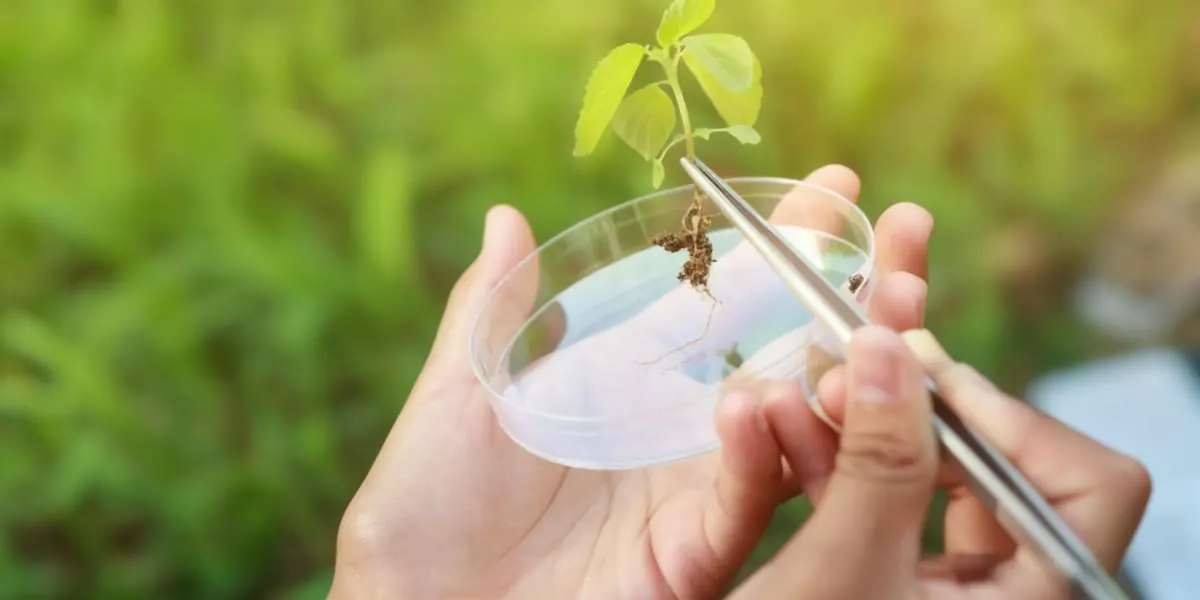
For decades, the connection between soil health and human health was argued indirectly — via mineral content, via nutrient density, via the logic that biologically healthy soil produces biologically superior food. The evidence was strong but inferential. Now, a wave of new research is closing that inferential gap in a way that changes the conversation entirely: specific microorganisms are being tracked, identified, and confirmed as they travel from soil through plants into the human gut. The soil microbiome is not just beneath our feet. It is inside us.
In early 2026, Johns Hopkins University published the preliminary findings from its ambitious US soil microbiome mapping initiative — the most comprehensive genomic survey of agricultural soil biology ever undertaken. Using metagenomic sequencing across hundreds of farm sites representing diverse soil types, climates, and management systems, the study identified over 1,000 bacterial strains that were previously unknown to science.
This is not a marginal addition to existing knowledge. It represents a fundamental expansion of the catalogue of life present in agricultural soils — organisms that have been there, in their billions, throughout the history of agriculture, but which our scientific tools were insufficiently powerful to see. Many of these strains appear to play roles in nutrient cycling, plant defence priming, and — critically — cross-kingdom interactions that include the human digestive system.
The implications extend far beyond academic curiosity. If we have been managing agricultural soils for decades without knowing that 1,000 or more of their resident species even existed, we have been making management decisions — tillage, fertiliser application, pesticide use, crop rotation — in partial ignorance of the biological system we were managing. The disruptions those decisions caused extended beyond what we could measure, to species and interactions that were invisible to us.
For the UK, the Hopkins findings raise an urgent question: what does the British soil microbiome contain, and what has intensive agriculture done to it? We do not yet have an equivalent study. Rothamsted Research, the world's oldest agricultural research station, has long-term soil datasets of extraordinary value, but the genomic resolution of its soil biology characterisation has lagged behind what is now technically achievable. There is a strong argument that the UK needs its own soil microbiome mapping initiative — building on Rothamsted's unique longitudinal datasets and extending them with the metagenomic tools now available.
The Johns Hopkins discovery confirmed the scale of what we do not know. The 2025 Nature Communications paper, published by a collaborative team from the Netherlands, Germany, and the US, answered a different question: do soil microorganisms actually make the journey from soil into human biology, and if so, can we trace them?
The answer, using advanced DNA tracking and stable isotope tracing methods, was yes. The study mapped specific bacterial strains from soil samples, through the rhizosphere — the zone immediately surrounding plant roots — into plant tissue, and ultimately into the gut microbiomes of individuals consuming those plants. The strains were identifiable across the full journey. The soil-plant-gut axis is not a metaphor. It is a measurable biological pathway.
This finding has several profound implications. First, it means that the microbial composition of the soil in which food is grown has a direct bearing on the microbial inputs to the gut — not just through the fibre that feeds existing gut bacteria, but through the actual delivery of soil-origin microorganisms to the gut ecosystem. Farming practice shapes not only the nutritional content of food, but its microbial content — and that microbial content reaches human biology.
Second, it means that the destruction of soil microbial diversity through intensive farming practice has potential human health consequences that extend beyond mineral deficiency. A soil depleted of microbial diversity produces food depleted of microbial diversity. Humans consuming that food receive a narrower microbial input to their gut ecosystem — at a time when gut microbiome diversity is increasingly linked to immune function, inflammatory regulation, mental health, and metabolic health.
"The soil microbiome is not just beneath our feet — it's inside us. The biological condition of agricultural soil is, in a meaningful and measurable sense, a determinant of human biology."
To understand how microorganisms move from soil into plants, it helps to understand the mycorrhizal network — the fungal infrastructure that connects plant roots to the wider soil ecosystem. Mycorrhizal fungi colonise plant roots and extend fine hyphal threads through the surrounding soil — threads so fine they penetrate pore spaces that no root hair could reach, and so extensive that they increase the effective surface area of a plant's root system by up to 700 times.
This network is not a passive mineral transport system. It is a bidirectional channel of biological exchange. Carbohydrates flow outward from the plant to the fungi. In return, water, phosphorus, zinc, copper, and a range of other minerals flow inward — but so do microbial signals, biological compounds, and, as the recent research suggests, microorganisms themselves. The mycorrhizal network is the highway along which the soil-plant dialogue occurs.
Research from the University of Nottingham has characterised mycorrhizal network dynamics in UK agricultural systems across multiple soil types and crop rotations. The consistent finding is that intensive tillage, high-phosphorus fertiliser inputs, and repeated fungicide applications — the defining features of conventional arable production — all suppress mycorrhizal colonisation. Farms that have transitioned to reduced-tillage or no-till systems, with lower synthetic phosphorus inputs, show substantially higher mycorrhizal colonisation rates, higher microbial diversity in the rhizosphere, and — in studies that measured nutritional outcomes — higher mineral concentrations in harvested crops.
The mycorrhizal network is also the system most at risk from the intensification of the past 70 years. Each tillage pass physically severs fungal threads. High-phosphorus fertiliser removes the plant's incentive to maintain the fungal partnership. Broad-spectrum fungicides kill indiscriminately. The result is that the biological infrastructure most responsible for connecting soil health to plant nutrition — and now, we understand, for routing microbial inputs from soil to human gut — has been systematically disrupted across much of UK farmland.
One of the most striking threads in the emerging research on the soil-plant-human axis concerns immune development and allergic disease. The "old friends" hypothesis — developed by Professor Graham Rook and others — proposes that the human immune system evolved in close contact with environmental microorganisms, particularly soil-derived ones, and that modern disconnection from those microorganisms is a primary driver of the epidemic rise in allergic and autoimmune conditions.
The evidence is accumulating rapidly. Studies comparing populations with high levels of environmental microbial exposure — farmers, rural communities, children who play in soil — consistently show lower rates of asthma, hay fever, eczema, and inflammatory bowel disease than matched urban populations. The protective effect is strongest in early life, when immune programming is most plastic, but measurable across the life course.
The implications for how we think about food are significant. If soil-origin microorganisms contribute to immune education through dietary exposure — as the Nature Communications research suggests — then the microbial poverty of intensively produced food is not just a nutritional problem. It is an immune health problem. Food grown in biologically depleted soil delivers fewer microbial signals to the gut, provides weaker immune education, and may contribute to the immune dysregulation that drives allergic disease.
Rothamsted Research's long-term datasets offer a unique window into how this has changed over time. Rothamsted holds soil samples from continuous monitoring plots dating back to the 1840s — a biological archive of extraordinary depth. Metagenomic reanalysis of archived samples alongside contemporary monitoring is beginning to reveal the scale of microbial diversity loss in UK agricultural soils over 150 years of intensification. The picture is not encouraging.
The "One Health" framework — which recognises human health, animal health, plant health, and environmental health as facets of a single interconnected system — has been formally endorsed by the World Health Organisation, the Food and Agriculture Organisation of the United Nations, and the United Nations Environment Programme. It is now the dominant framework for thinking about zoonotic disease, antimicrobial resistance, and a growing range of chronic health challenges.
What One Health has not yet fully incorporated — but is beginning to — is the nutritional quality dimension. The connection between soil health and human health through food quality sits naturally within the One Health framework, but has historically been treated as a separate concern from the infectious disease and antimicrobial resistance issues that dominate One Health policy discussions. The new microbiome research is beginning to change that, because it demonstrates that the soil-human health connection operates through microbial channels as well as nutritional ones.
For the UK, there is an opportunity to position soil health as a One Health issue rather than purely an environmental or agricultural one. This reframing matters because it brings different stakeholders — public health bodies, NHS commissioners, NICE, the Department of Health — into the conversation about what happens on farms. A soil health policy is also, under the One Health lens, a public health policy. The investment case changes when that connection is made explicit.
The soil-plant-human axis research validates — and in some respects extends — the findings we presented in Chapters 2 and 3 of the Growing Health white paper. Chapter 2 set out the evidence for the soil-nutrient density connection: how soil biology determines what minerals, vitamins, and secondary metabolites end up in food. Chapter 3 explored the human health evidence: how dietary nutrient density relates to chronic disease burden, and how the micronutrient gap affects population health even where caloric intake is adequate.
What the 2025 and 2026 research adds is the mechanistic link. We knew that soil health correlated with food quality. We knew that food quality correlated with health outcomes. The new microbiome research shows us part of the mechanism: specific organisms travel the pathway. This is the difference between correlation and causation, and it strengthens the entire evidence base that underpins Vitagri's work.
It also strengthens the case for measurement. If the microbial composition of soil contributes directly to human gut biology through the food supply, then the microbial composition of soil is a public health variable — one that should be monitored, managed, and, where possible, improved. The GroundUp Framework's emphasis on soil biological health metrics — microbial biomass, diversity indices, mycorrhizal colonisation rates — is not merely an agricultural quality assurance measure. It is a proxy indicator for inputs to human biology that we are only beginning to understand.
The UK needs its own soil microbiome mapping programme. It needs longitudinal monitoring of microbial diversity in agricultural soils, linked to crop nutritional quality data and, ultimately, to human health outcomes. The scientific tools now exist. The policy will, in time, follow — but the science needs to be built first, and built with the rigour that connects agricultural management to human health in ways that policymakers and the public can act on.
The GroundUp Framework provides the soil biological health metrics — microbial biomass, diversity, mycorrhizal colonisation — that translate this science into measurable farm-level indicators linked to human health outcomes.
The full evidence base for the soil-plant-human connection is in our 51-page Growing Health white paper. Free to download, no paywall, no login required.
Or subscribe to the Vitagri Substack for research updates.
The preventive healthcare case for treating soil health as a public health investment — written for health and policy audiences.

The government has streamlined SFI and opened £225m in new grants. What the reforms get right on soil health — and the gap they don't close.
The mechanisms linking soil biology to the nutritional profile of crops — and 70 years of measurable decline in UK food composition data.