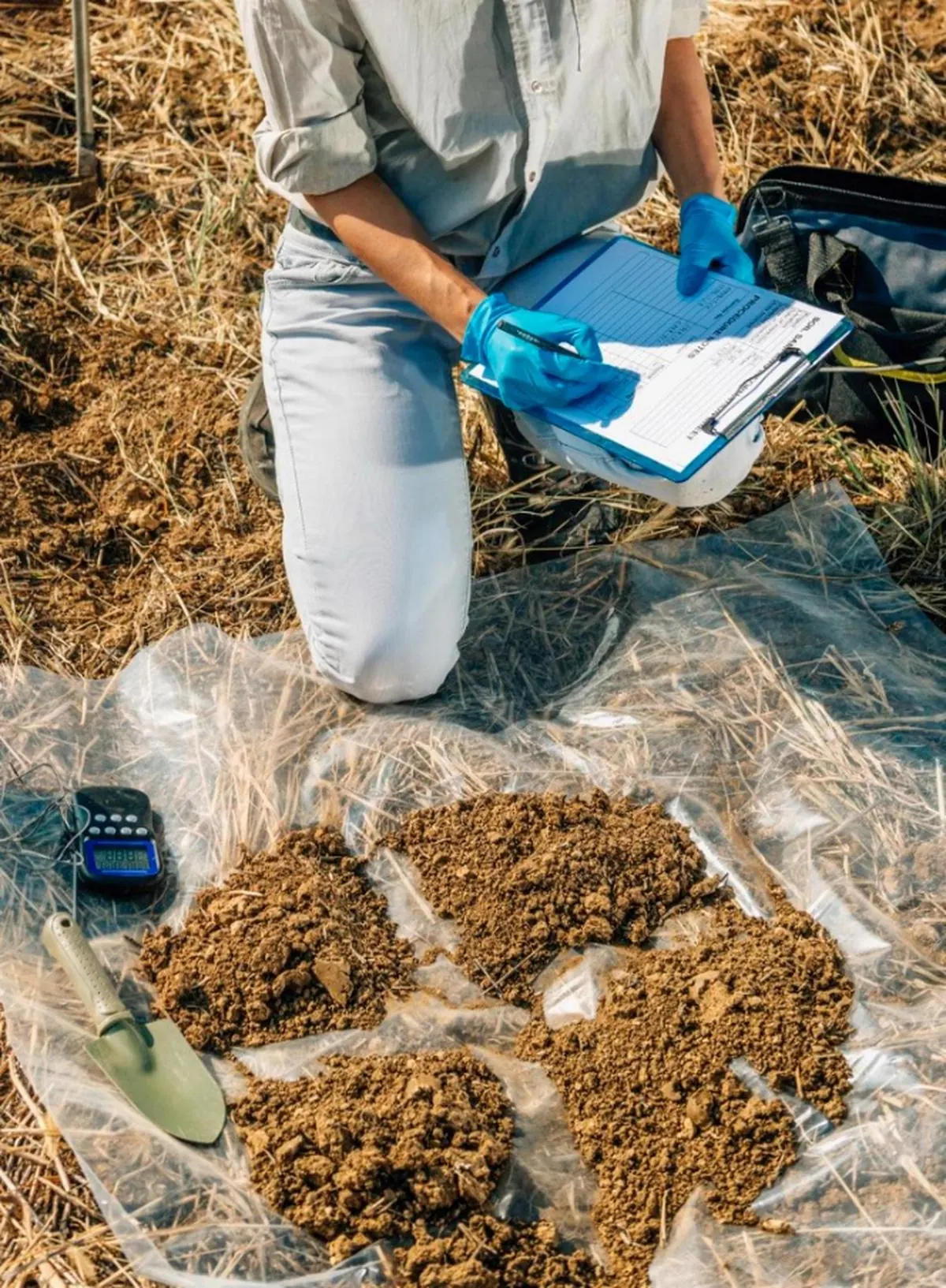
New UK data from a major soil monitoring programme led by First Milk, in partnership with soil carbon specialists Agricarbon, has revealed measurable soil carbon gains of up to 8.9 tonnes of carbon per hectare from regenerative dairy farming practices. The results come from three farms re-tested nearly four years after baseline sampling — showing that regenerative management can produce significant, verifiable improvements in soil carbon stocks within a single farm management cycle.
What does 8.9 tonnes of soil carbon per hectare mean?
Soil carbon is measured in tonnes of carbon per hectare, typically to a depth of 30cm or more. An increase of 8.9 tonnes of carbon per hectare is a substantial gain — roughly equivalent to sequestering around 32.6 tonnes of CO₂ equivalent per hectare. To put that in context, the average UK car emits approximately 2 tonnes of CO₂ per year, meaning each hectare of regeneratively managed dairy land in this trial is offsetting the equivalent of more than 16 years of car emissions.
But the climate story is only part of what makes these numbers important. Soil organic carbon is not just a carbon store — it is a measure of biological activity and mineral availability. Carbon-rich soils have higher microbial biomass, greater enzyme activity, and improved mineral cycling. In practical terms, this means more nutrient-dense crops and dairy products.
The Soil Carbon–Nutrient Density Connection
The relationship between soil organic matter and crop nutritional quality is one of the central themes of Vitagri's Growing Health Report. The mechanism is straightforward: as soil organic carbon increases, so does microbial diversity and activity. More microbes mean more nutrient cycling — the conversion of locked mineral forms into plant-available ions. The result is food that contains more of what our bodies need.
For dairy specifically, the evidence is particularly compelling. Milk and cheese from pasture-raised, regeneratively managed dairy farms consistently show higher concentrations of omega-3 fatty acids, conjugated linoleic acid (CLA), fat-soluble vitamins, and trace minerals compared with intensively produced equivalents. These differences are not incidental — they are a direct consequence of what the animals eat, and what the pasture contains, which in turn reflects the health of the soil beneath it.
What has the First Milk regenerative programme demonstrated?
First Milk is the UK's largest farmer-owned dairy cooperative, supplying well-known brands including Lake District Dairy and Graham's Family Dairy. Its partnership with Agricarbon to monitor soil carbon across its farm base represents one of the most rigorous soil measurement programmes in the UK dairy sector.
The fact that carbon gains are measurable within four years is significant for two reasons. First, it demonstrates that regenerative practices produce detectable results on a commercially relevant timescale — farmers and investors don't have to wait decades to see outcomes. Second, it demonstrates that the measurement infrastructure already exists to verify these outcomes independently. What's now needed is the equivalent framework for measuring the nutritional outcomes alongside the environmental ones.
Implications for UK Farming Policy
The results from First Milk and Agricarbon arrive at a critical moment for UK agricultural policy. The Sustainable Farming Incentive is still in development, and the question of what public money should reward farmers to do — beyond baseline environmental management — is genuinely open.
Vitagri's position is that soil health, as measured by organic carbon and biological activity, should become a core metric in UK agricultural payments — not merely as a proxy for climate outcomes, but as a direct measure of food system resilience and public health value. A soil that produces food rich in omega-3 fatty acids, minerals, and antioxidants is performing a public health service that the current food system entirely fails to value or communicate.
The First Milk data shows that we can measure these changes. The science in Vitagri's Growing Health Report shows that these changes matter nutritionally. The next step is building the frameworks — agricultural, commercial, and regulatory — that translate soil carbon gains into verified nutritional claims that farmers, retailers, and consumers can rely on.
Explore the evidence connecting soil health to nutritional quality