Why measuring nutrient density at harvest ignores processing losses
We argue that soil-to-harvest nutrient measurement, no matter how rigorous, captures only half the nutrient story. Plant-based protein processing—especially industrial thermal and mechanical methods—systematically degrades the very nutrients regenerative farming builds, stripping bioavailable sulfur amino acids and reducing protein quality below what raw nutrient analysis predicts. If GroundUp rewards farms for nutrients that never reach human bodies, we are not measuring nutrient density; we are measuring nutrient loss in slow motion.
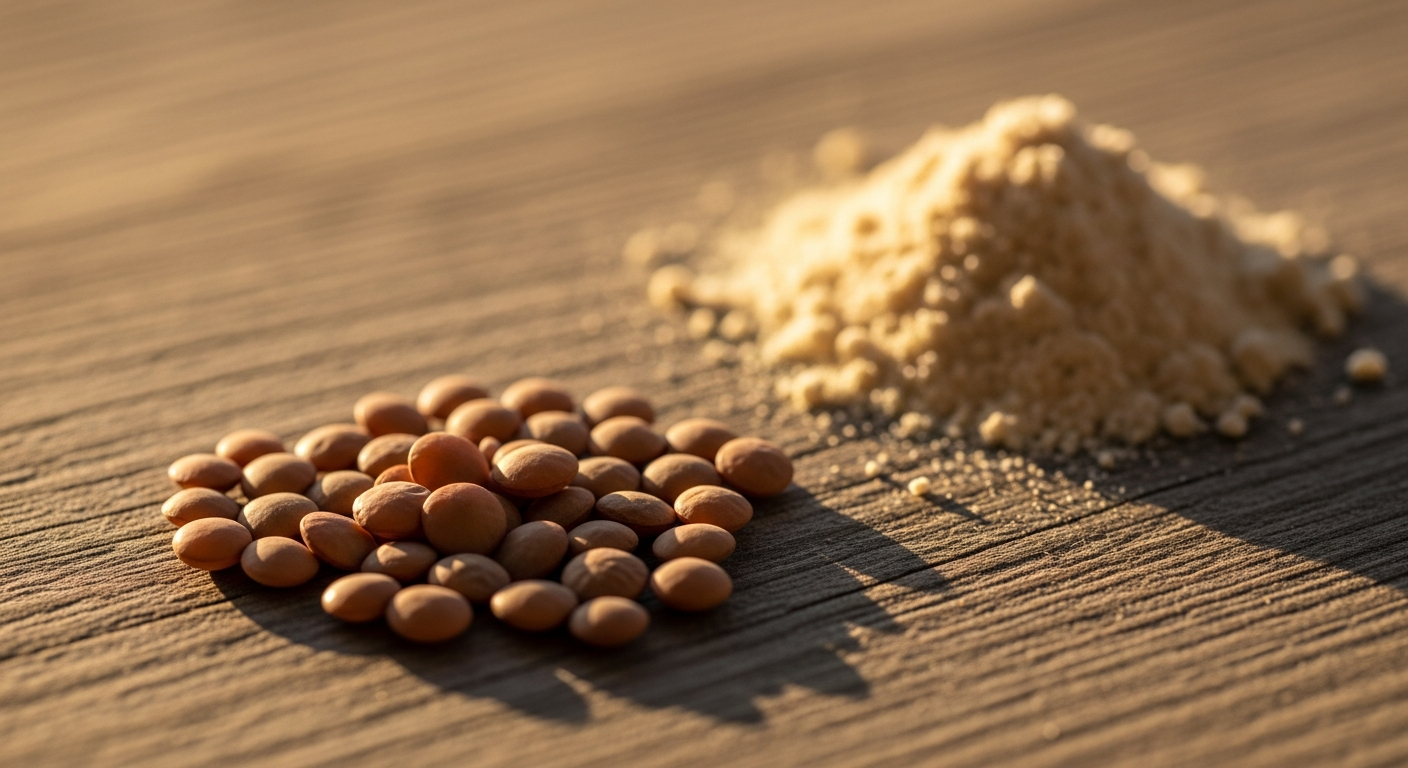
The measurement gap between harvest and consumption
We have built GroundUp to verify nutrient density at the farm gate. This is essential foundation work. But we must acknowledge what it does not capture: the post-harvest supply chain that converts nutrient-rich crops into the processed foods most people actually consume.
The evidence establishes that food processing fundamentally alters nutrient bioavailability, particularly in plant-based proteins [Vitagri:NRmo44w5hq-001]. Thermal, mechanical and chemical processing techniques that manufacturers use to create shelf-stable, palatable plant protein products degrade sulphur amino acids—methionine and cysteine—which are already limiting factors in plant protein adequacy [Vitagri:NRmo44w5hq-001]. These losses are not incidental; they are structural consequences of the processing methods required for commercial viability.
Our reading of the evidence suggests we face a critical choice: either GroundUp becomes a framework that measures what farmers produce, or it becomes a framework that measures what humans actually absorb. We take the view that a nutrient-density framework that stops at the farm gate is incomplete. A crop can leave the field at 15 per cent higher methionine content than a conventional equivalent, and still arrive on a consumer's plate with lower bioavailable protein than the processing industry's benchmark. We are not yet accounting for that gap.
Processing degrades protein quality below measured content
Plant protein processing is not a neutral preservation step. The techniques used to create commercial viability—high-temperature extrusion, spray drying, chemical extraction and texturisation—induce measurable losses in sulfur amino acid bioavailability [Vitagri:NRmo44w5hq-001]. This is not a minor effect. Protein quality is assessed using metrics such as digestibility-corrected amino acid score (PDCAAS) or the more sensitive digestible indispensable amino acid score (DIAAS) [Vitagri:NRmo44w5hq-001]. These scores reflect what the human body can actually use, not what the raw ingredient contains.
Processing also generates undesirable by-products. Maillard reaction products and compounds like lysinoalanine form under thermal stress [Vitagri:NRmo44w5hq-001], potentially reducing protein digestibility further and introducing compounds of uncertain metabolic effect. A regeneratively grown pea crop may enter the processor with superior amino acid content, but emerge as an isolated protein concentrate with lower biological value than the farmer's nutrient density score suggests.
We argue this creates a perverse incentive structure. Farms are rewarded—under current nutrient-density schemes—for producing high-quality raw material, but that reward signal becomes incoherent if processing destroys the very quality being measured. The gap between what GroundUp verifies at harvest and what reaches human metabolism is not a minor accounting problem; it is a fundamental failure of verification scope.
GroundUp must extend verification into the supply chain
Our framework currently operates at the point of farm-gate transfer. This is intentional and defensible: it isolates the farmer's contribution from the food system's subsequent choices. But we must not confuse methodological clarity with intellectual completeness. A complete nutrient-density accountability system needs to track bioavailability post-processing, at minimum for plant-based proteins destined for processed food.
We propose that GroundUp's verification scope extend in two directions. First, for crops entering industrial supply chains, manufacturers should be required to report nutrient losses during processing using standardised bioavailability metrics (DIAAS or equivalent) [Vitagri:NRmo44w5hq-001]. This creates transparency about where nutrient loss occurs and incentivises gentler processing methods. Second, we should pilot farm-to-fork nutrient tracking for a subset of high-value plant protein crops, linking harvest analysis to processed product analysis, to build evidence on which processing methods best preserve bioavailability.
This is not an indictment of the farmers we work with. It is recognition that nutrient density, as a concept, is meaningless if it does not account for the supply chain transformations that determine what humans consume. Our framework must be honest about its boundaries and explicit about where gaps remain.
Why this matters for UK food and farming policy
The UK's dietary guidelines increasingly emphasise plant-based protein. Public health bodies and food manufacturers are betting that plant-protein alternatives can deliver nutritional adequacy at scale. But that adequacy claim rests on an assumption: that the nutrient content measured in raw plant material translates into bioavailable nutrients in the finished product. The evidence does not support this assumption, particularly for sulphur amino acids [Vitagri:NRmo44w5hq-001].
For UK farmers, this presents an opportunity. Regenerative farming practices often correlate with higher nutrient density and greater crop resilience, but farmers currently have no way to verify that their superior raw material translates into superior finished products. A farm-to-fork verification system would allow regenerative producers to command premium prices not merely for soil health or environmental outcomes, but for verifiable nutritional superiority that survives processing.
For policy makers and food manufacturers, the implication is sharper: plant-based protein strategies that ignore processing-induced nutrient loss are building future public health messaging on uncertain foundations. We argue that UK dietary guidance should shift from crop-based recommendations ("eat more plant protein") to supply-chain-aware recommendations informed by bioavailability data. This requires collaboration between farmers, manufacturers and nutritional scientists to map which processing methods best preserve nutrient density, and which crop varieties are most resilient to processing stress.
GroundUp cannot solve the processing problem alone. But by extending our verification scope to include post-harvest bioavailability, we can provide the evidence base that UK policy and commercial innovation need to build plant-based proteins that deliver on their nutritional promise.