Insights for farmers
Practical findings you can take to the field.

Nutrient density survives climate stress in agroforestry, not in monoculture
Agroforestry systems maintain phytochemical and secondary metabolite profiles under heat and drought where monocultures fail. GroundUp should reward climate-resilient nutrient stability.

Forage quality, not farming system, determines meat omega-3 bioavailability
Feed composition is the primary nutrient-density lever in livestock production. GroundUp must measure forage quality directly, not infer it from certification labels.

Pesticide Residues Impair Nutrient Absorption—a Food Quality Issue GroundUp Must Measure
Pesticide burden reduces nutrient bioavailability and metabolic health. We argue GroundUp must verify pesticide-free status as a nutrient-quality factor, not merely a safety checkpoint.
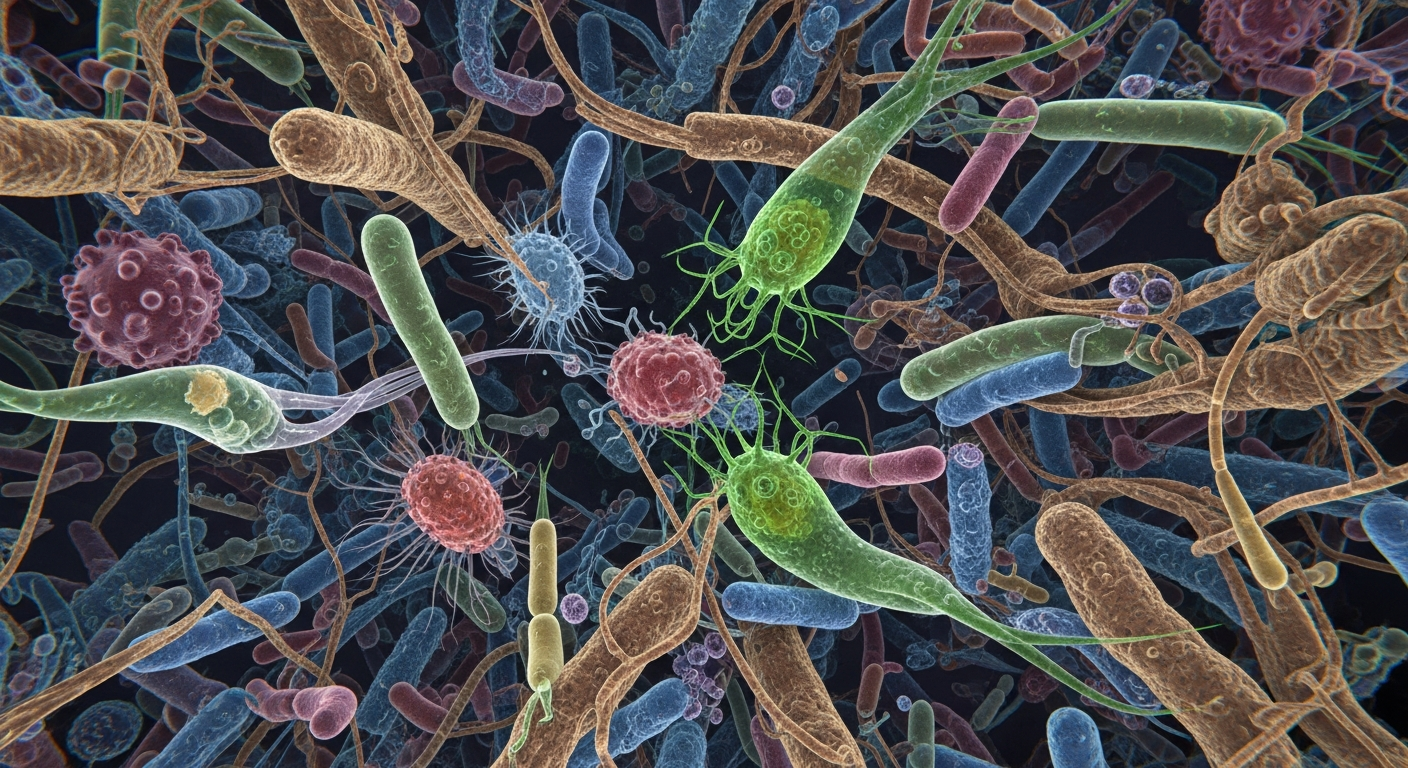
Plant-growth-promoting microbes collapse the false divide between biocontrol and nutrient uptake
PGPM inoculants simultaneously suppress pathogens and enhance nutrient availability. GroundUp must measure these as correlated outcomes, not separate metrics.

Plasma fatty acid changes in omega-3 supplemented livestock do not prove consumer nutrient benefit
Acute metabolic shifts in livestock fed omega-3 supplements mask the absence of end-to-consumer bioavailability evidence. GroundUp must verify tissue accumulation, not production biomarkers.

Microbial life history, not farming labels, determines soil nutrient density
Organic vs. conventional certification masks the real driver of nutrient-dense food: soil microbial community strategy. GroundUp measures function, not labels.

Soil carbon gains do not guarantee nutrient bioavailability—why GroundUp measures both
High soil organic matter masks a critical truth: cover crops build carbon stocks without proportionally mobilising bioavailable minerals. GroundUp separates these dynamics.

Pesticide Residues Reduce Nutrient Bioavailability—a Toxicological Discount GroundUp Must Measure
Chronic pesticide exposure impairs nutrient absorption and neurological function. Vitagri argues nutrient-density scoring must account for this toxicological cost.

Intercropping with reduced nitrogen sustains soil biology and yield simultaneously
Evidence shows polyculture systems maintain soil microbial function and crop productivity at lower nitrogen inputs than monoculture. This resolves a false trade-off in regenerative agriculture.

Why measuring nutrient density at harvest ignores processing losses
Plant protein processing strips sulfur amino acids and degrades bioavailability. GroundUp must extend measurement from farm gate to plate.

The SFI 2026 Reforms: What They Mean for Nutrient-Dense Food Production
SFI cut from 102 to 71 actions, £225m in new grants opening July 2026. What the reforms get right on soil health — and the gap they don’t close.

From Soil Microbiome to Gut Microbiome: The Science of the Soil-Plant-Human Axis
New research maps how specific microorganisms travel from soil through plants into the human gut. The soil microbiome is not just beneath our feet — it’s inside us.

The 200-fold Antioxidant Variation — What it Means for Farmers
New evidence on how farming practice creates dramatic variation in the nutritional content of the same crop type.

Why the UK Food System Doesn’t Reward Quality
An analysis of the market failures that prevent nutritional density from commanding a price premium — and how to fix them.
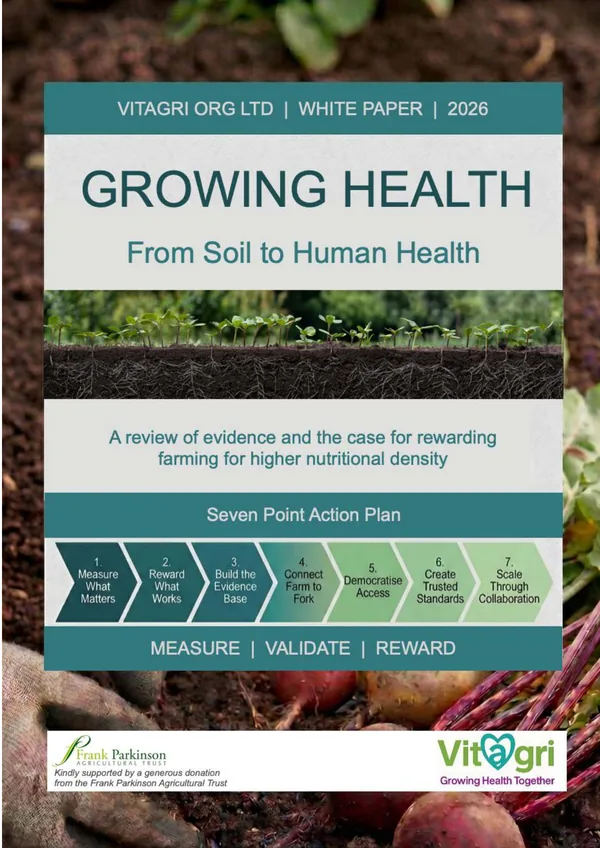
Growing Health: From Soil to Human Health (White Paper)
Vitagri’s 51-page flagship white paper synthesising 3,000+ peer-reviewed studies into a practical framework for measuring, verifying and rewarding nutrient-dense food production in the UK. The apex lo